|
|
About The River Severn
Source |
|---|
| The river Severn has its source in mid-west Wales in the Cambrian mountains, specifically the mountain called Plynlimon (Pumlumon in Welsh).
The top of Plynlimon is a heather and peat, boggy expanse. It has the beauty of a wild looking moorland with one notable feature being a large pole marking the 'official' start of the Severn. |
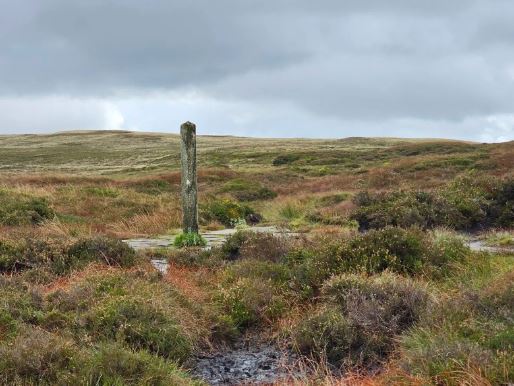
Source: Komoot
Name |
|---|
| The origin and meaning of the English name 'Severn' has several possibilities, but it's possible to track the evolution of the name through chronicled references. For example, an Anglo-Saxon chronicle written in 894 on the Battle of Buttington with the vikings references the Saeferne.
The following table shows the name evolution from this point: |
| Name | Year | Period | Possible Infuences |
|---|---|---|---|
| Saeferne | 894 | Viking Age | Old English: Saefor = Seafarer |
| Saverna | 1086 | Norman Conquest | English dialect: Seave = Sedge, Rush * |
| Severne | 1205 | 13th Century | English dialect: Seave |
| Sephern | 1479 | 15th Century | Old Norse: Sef = Sedge, rush |
| Seaverne | 1584 | 16th Century | English dialect: Seave |
| Seaverne | 1677 | 17th Century | English dialect: Seave |
| Severn | 1836 | 19th Century | Current name |
Source: Wikipedia
| * The reference to sedge and rush as an influence is interesting. A tribe known as the Hwicce (whose territory around the year 580 included what is now referred to as Hereford and Worcestershire) lived along the banks of the River Severn, in the area of today's Worcester.
The Hwicce were weavers using the rushes and reeds that once grew in abundance on the river bank to create baskets. The current word 'wicker', describes the type of baskets produced by these early people. Perhaps this link to rushes gives some credance to the cited influence on the name. |
| Historically the river has also been referred to as Sabrina, first recorded in the 2nd Century by the Romans. Sabrina though is the latinized version of the ancient Celtic name Hafron which remains the Welsh name for the river today.
The Celtic origin of the name Hafron has links to summer, a time historically associated with abundance. (The latinised Sabrina also has a meaning linked to Summer). There is also a heavy dose of mythology, with Hafren (Sabrina) being a drowned princess who became the goddess of the river. |
Length |
|---|
| The Severn is the UK's longest river at 220 miles (the river Thames is the second longest at 215 miles). For some wider context the longest river in the British and Irish archipelago is the Irish river Shannon at 225 miles. |
Fall |
| The source at the top of Plynlimon is some 2000 feet above sea level, with two thirds of this height lost in the first nine miles of the Severn's length. |
Tidal |
| The Severn is tidal and the estuary has the second highest tidal range in the world. The Severn at Worcester would have been affected by the tide prior to the introduction of locks and weirs (to support more consistent conditions for commercial navigation up upstream).
On the incoming tide (also referred to as the 'flood' tide), the water is funnelled by the topology into a narrower run at the top of the Bristol Channel and Severn Estuary. This funneling causes the water to surge forward in a series of waves up to 7 feet (depending on the moon phase). Known as the Severn Bore, these waves attract surfers who attempt to ride the wave for as long as possible upstream (the world record is 7.6 miles). |
Transporting Goods |
| It's probable that the Severn has been used for transportation since at least 6000 BC. The earliest known watercraft were carved out of logs to form a canoe shape.
Another early craft is the Coracle used on rivers for fishing and crossing.
This unusual craft pre-dated the Romans arriving in Britain but due to their simple construction (woven reeds or animal skins around a small wooden frame) ancient archeological finds are rare. However up until the 19th century the coracle was a common sight on the Severn. The following pictures show some examples (note: the third picture is at Camarthen but is included to illustrate the portability of these vessels). |
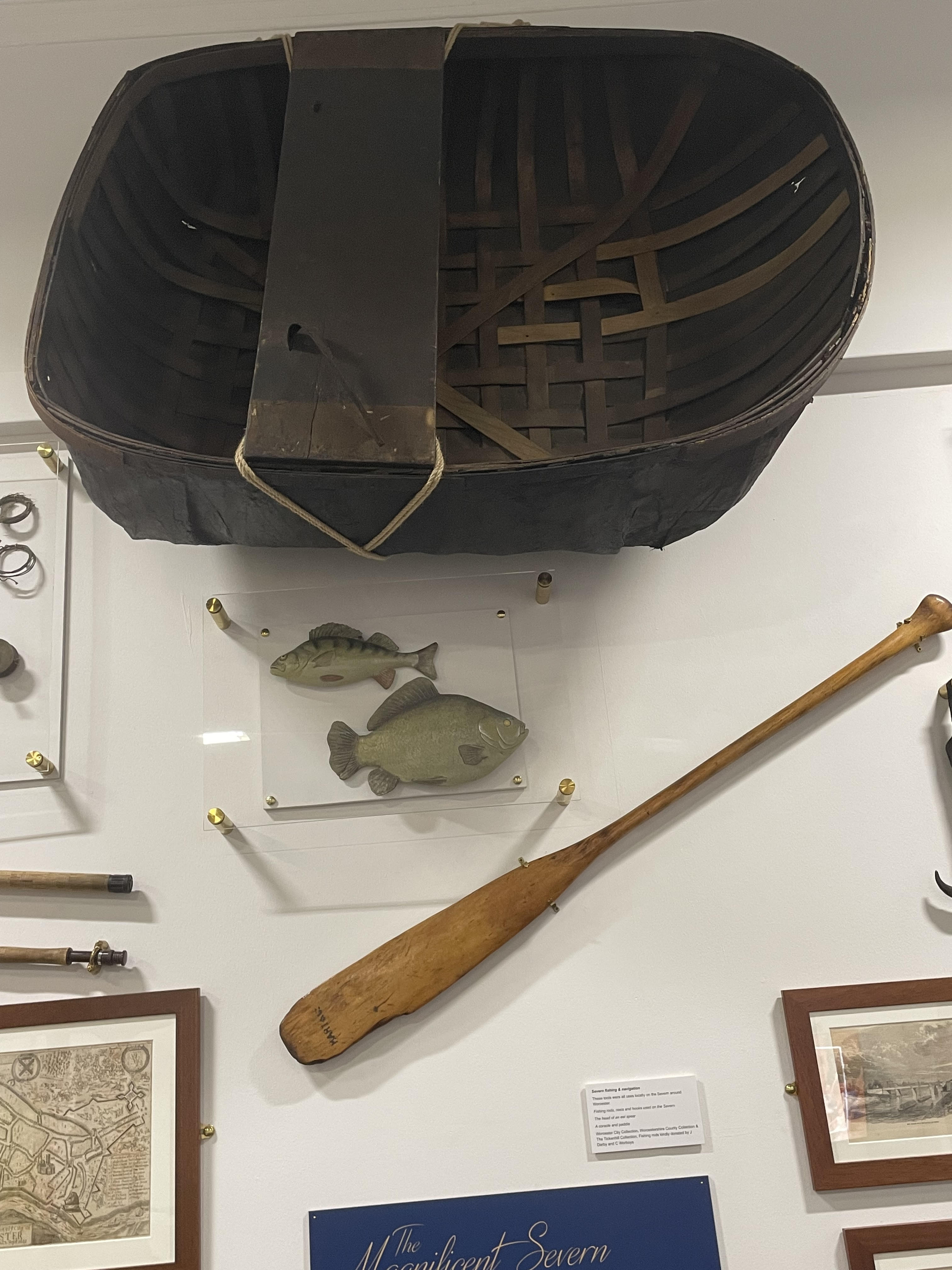
Source: Worcester Museum
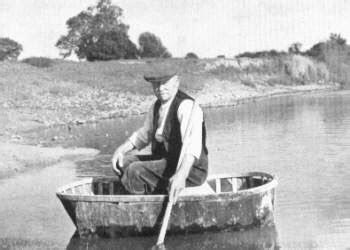
Source: unknown
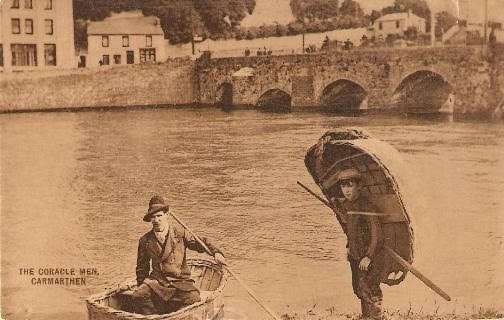
Source: unknown
|
During the Roman occupation at around AD43-410, the Romans were using the Severn to ship iron ore up to Worcester for smelting. Through the centuries coal, timber and stone have been transported up and down the Severn, as well as latter cargos of china clay for Royal Worcester Porcelen from 1751 and chocolate crumb destined for the Cadbury factory at Bournville in the late 1870s. Specialist boats called Trows were used for this. Oil was also shipped into Worcester on barges which off-loaded at Diglis oil basin, a little downstream of the Cathedral ferry crossing point. This transport method for oil carried on until the 1950s when it stopped after the construction of pipelines and the M5 motorway. |
Trows |
|---|
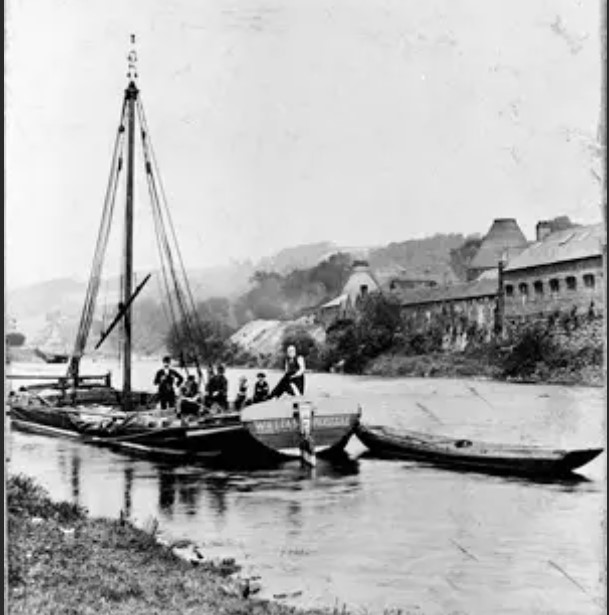
| Before the spread of the railway, Trows were a common sight on the Severn and her tributaries and were designed especially for Severn conditions. |
Source: Unknown
|
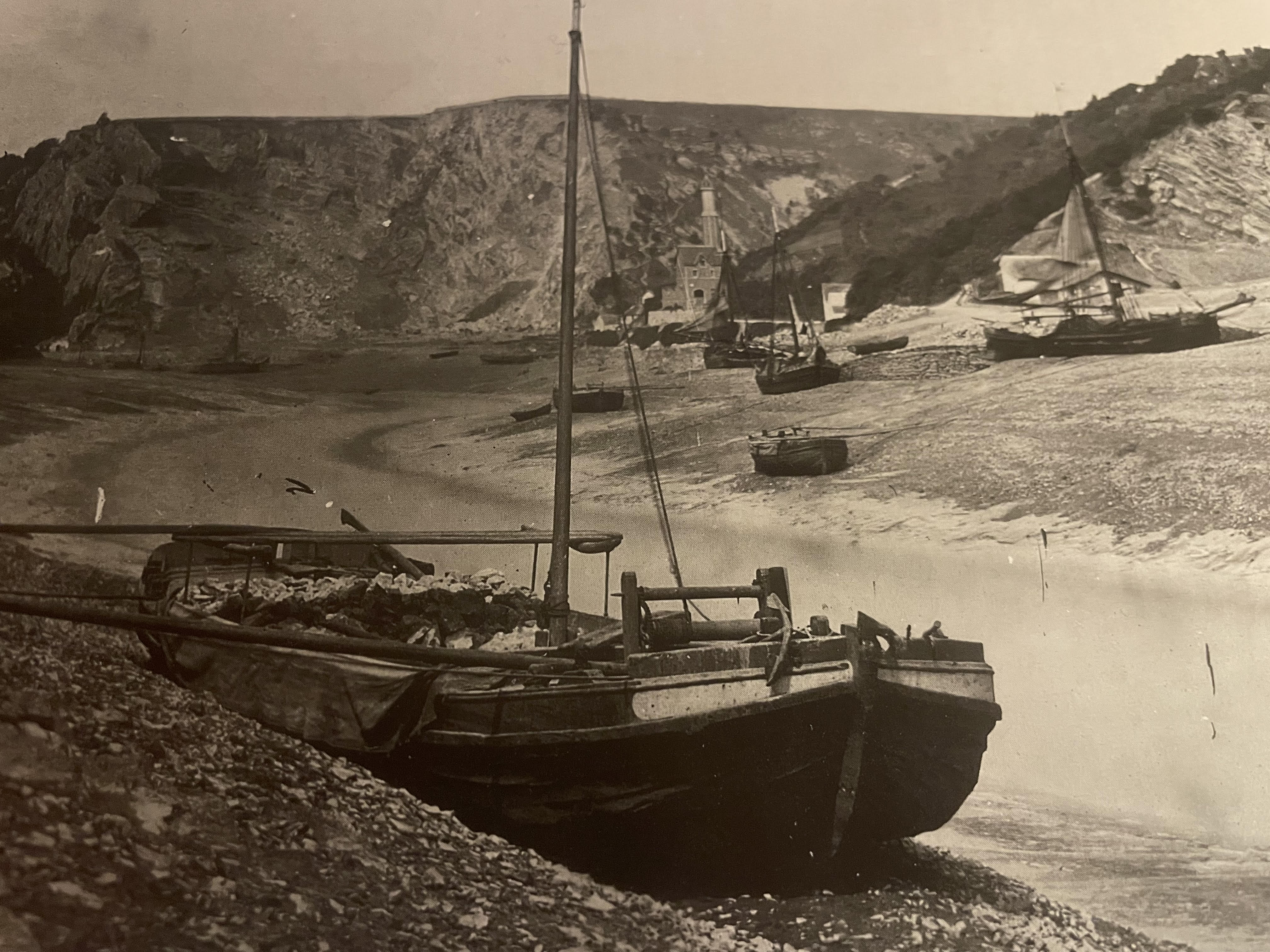
There were no formal designs or plans for these boats, and all were built by eye in local boat yards along the river by highly skilled boat builders. However Trows shared a number of attributes such as:
The following old photo highlights the main attribute of a trow in that it can rest on the river bed at low tide. (This picture is at low tide on the River Avon). |
Source: Unknown
|
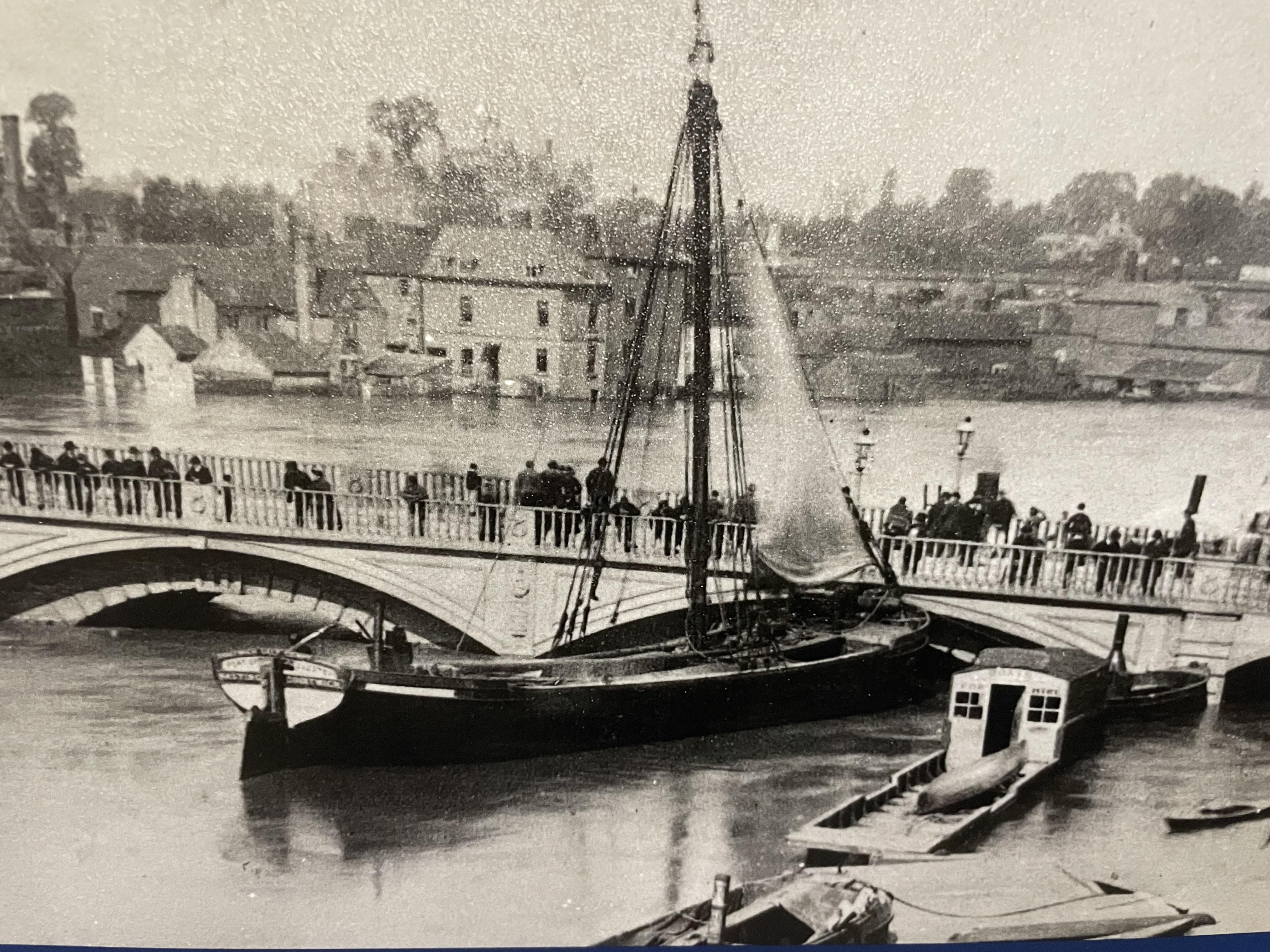
Trow design was further influenced according to which end of the Severn she worked at. This resulted in two distinct groups known as Upstream Trows (smaller) and Downstream Trows (larger with a bigger sail plan). The down stream Trows were also flat bottomed, but if venturing out of the Bristol Channel would be made more seaworthy by attaching a log underneath the hull tens of feet long with chains to act as a keel and counter balance. Upstream Trow skippers would often contract teams of men known as Bow Haulers to pull the boat along from the bank with lines, when the river was low with no wind and no incoming tide to help move the boat along upstream. The Upstream Trows would need to navigate bridges. For this the Trow's mast was fitted with a tabernacle which allowed the mast to be lowered and laid flat down the boat before being pulled back upright again once they had passed under the bridge. The following photo shows a Trow wedged against the city bridge after she came off her mooring during flood conditions, but illustrates the need to be able to lower the mast in normal conditions. |
Source: Unknown
|
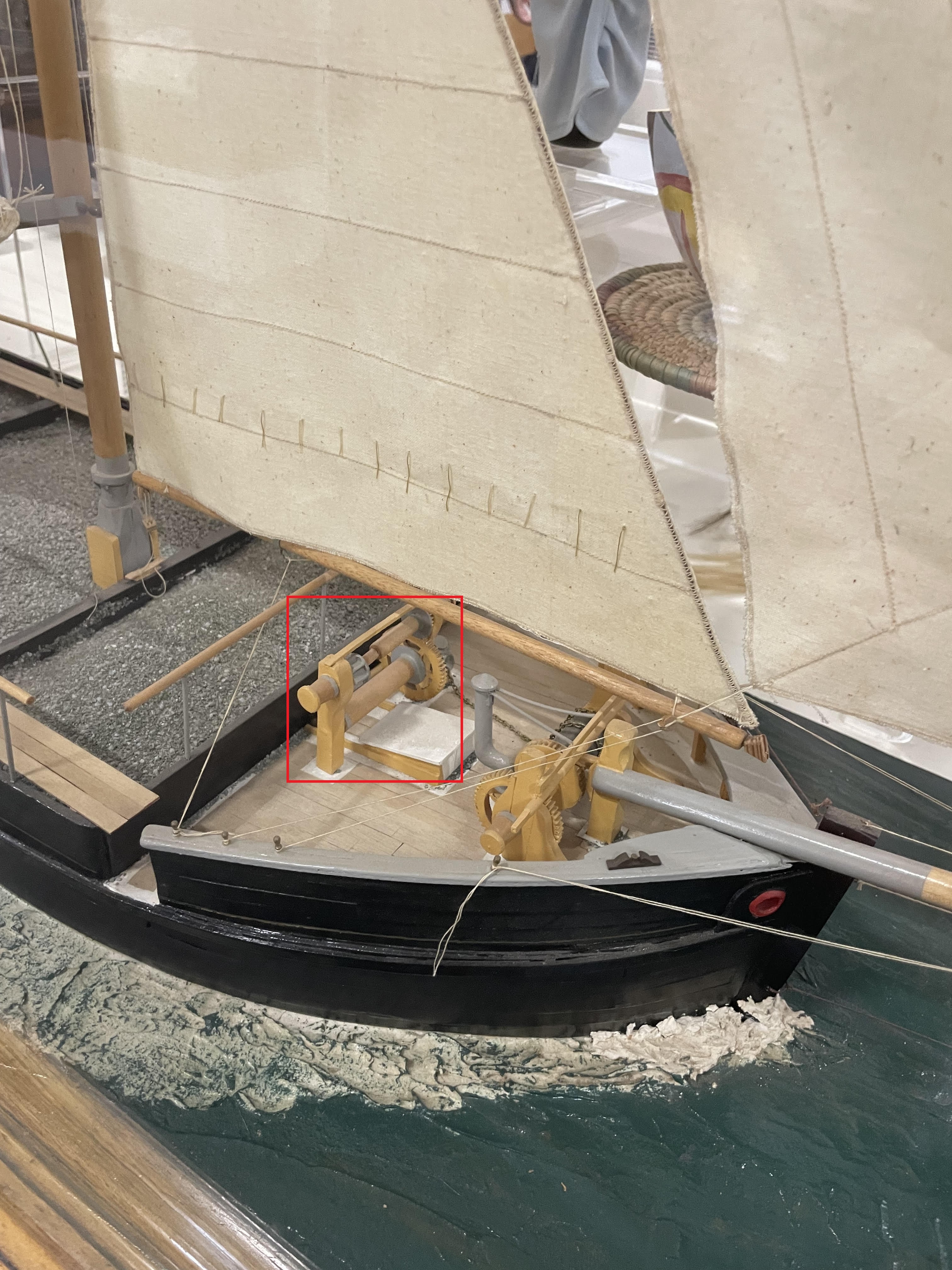
A winch on the foredeck facilitated the raising and lowering of the mast to get under bridges, as highlighted in the following picture of a model Trow. |
Source: Worcester Museum
References |
|
|---|---|
|
|
|