There were ferries across the River Severn long before there were bridges. These were supplemented by a series of fords, mostly upstream of Lincomb Lock. The River Severn used to be tidal at least as far upstream as Worcester, which effectively prevented the establishment of fords below Hallow. These crossings were mostly monopolised by land owners, religious orders and municipal authorities as a source of income.
The Worcester Cathedral Ferry was probably operating at a site near the Cathedral to the Severn Meadows long before 1300. At the time it was known as the Priory Ferry; The Priory existing alongside the present Cathedral, which was first established as a bishopric in 680AD, while the construction of the current Cathedral building began in 1084.
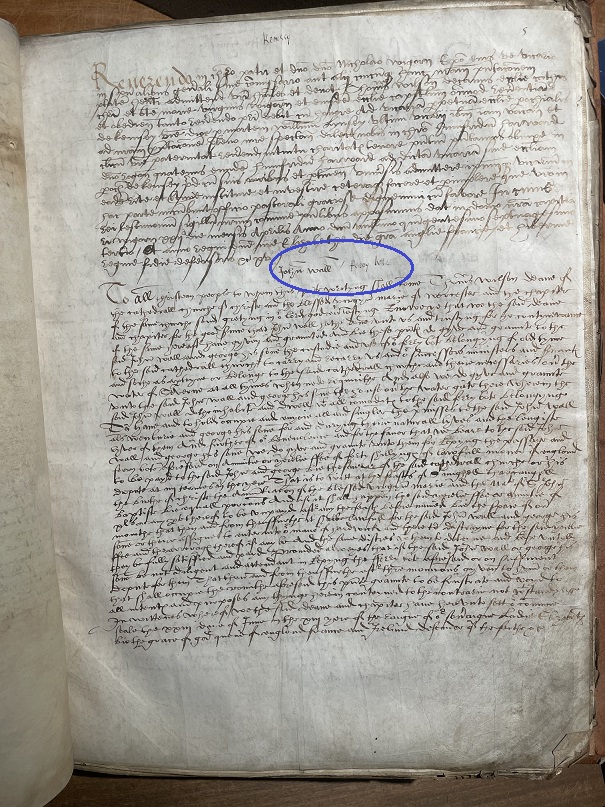
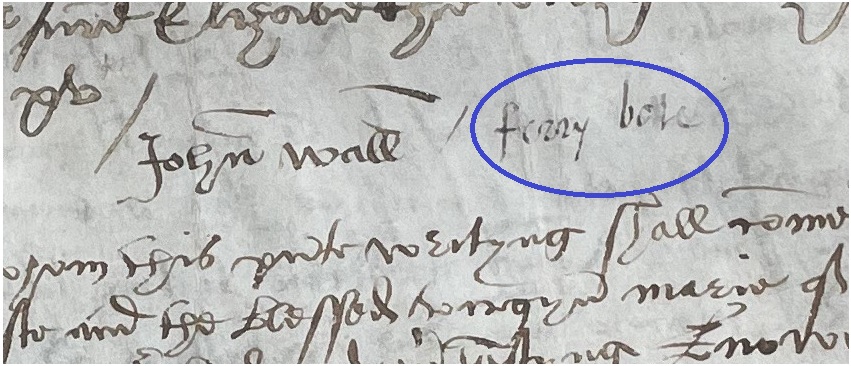
The ferry's existence was formalised in 1378 when a Watergate was built by the then Cathedral Cellarer (reponsible for organising food and drink production and delivery), William Power. Reference to the ferry can be seen in a 16th century cathedral chronical. The script is difficult to decipher, but the passage is labelled as 'ferry bote', which is subsequently referred to again throughout:
Source: Worcester Cathedral
Source: Worcester Cathedral
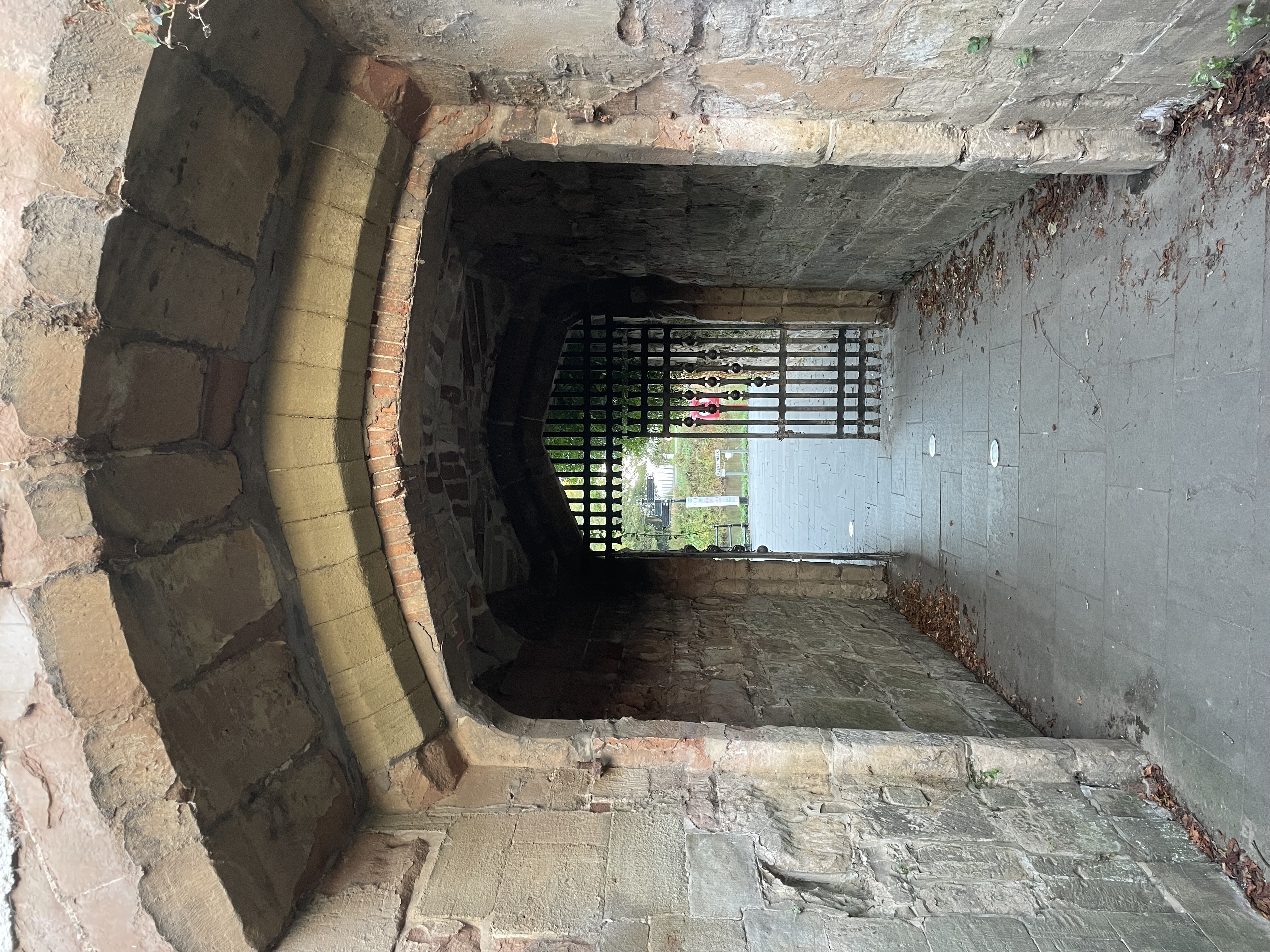
The Watergate was built as a strong sandstone defensive gate with a portcullis and a set of double doors along the line of the high stone walls that already existed to guard the City from river attack.
After the dissolution of the Priory, on the orders of Henry VIII in 1540, ownership of the ferry and gate passed, with the Severn Meadows, to the Dean and Chapter of the Cathedral and gave rise to the now familiar term for the land on the west bank opposite the Cathedral as the Chapter Meadow.
It was therefore from 1540 that the Cathedral Ferry officially operated from the Cathedral Watergate to the Chapter Meadow, just as it does today. The following is a recent photo of the view out to the river crossing place from inside the Watergate:
Source: Worcester Cathedral Ferry
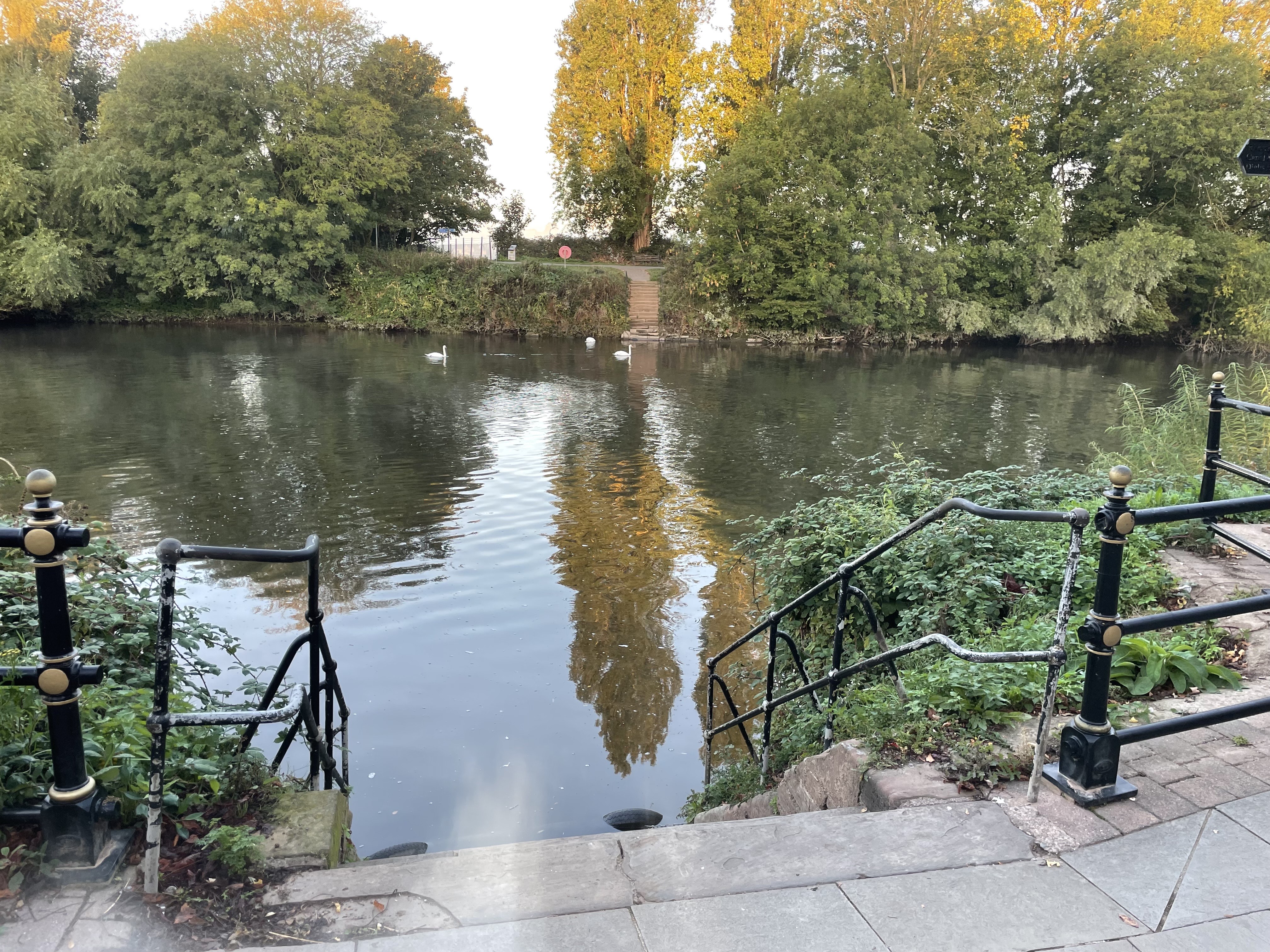
Walking through the Watergate takes you directly to the cathedral Watergate steps as they are today, looking across to the Chapter Meadow steps. The ferry operates between these two points. (Note the tyres in the water are strung across the steps to help protect the side of the ferry upon mooring along side).
Source: Worcester Cathedral Ferry
At one point (in addition to fording places), multiple ferries operated along the river severn. Those in the locality of Worcester are highlighted below:
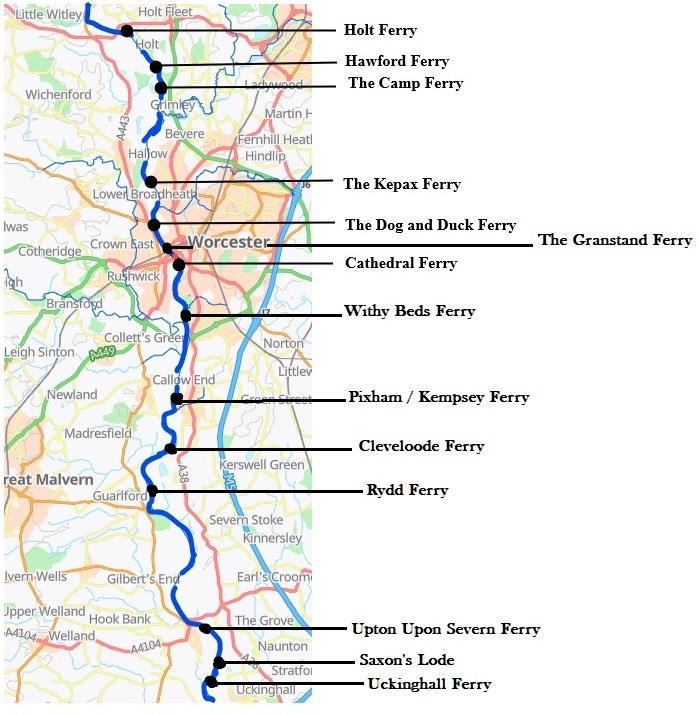
Source: Worcester Cathedral Ferry / Reference: G Gwilliam
Today, only the Cathedral Ferry remains. Passengers were always and are still transported over the river under oars alone.
The first bridge across the river was built before 1300. It was the most important crossing on the river severn and became the ‘M4 of its day’. It was a fortified structure and a toll was charged, which probably explains why the existing ferries survived for so long. The bridge was upgraded with a design by John Gwynne in 1781 and this was later demolished in 1932 to be replaced with the much wider bridge we know today.
There was a programme of lock building on the River Severn in the 1800s from the Severn Estuary up to Lincomb Lock at Stourport-on-Severn that effectively ceased all tidal effects. Five of the six Worcester ferries met their demise during the 20th Century with the last of these being the Grandstand Ferry, which closed in the 1960s.
Worcester Cathedral Ferry is now the only ferry on the river Severn, still operating under oars alone.
Even the Cathedral Ferry has had its challenges. The ferry suffered hiatuses during both World Wars, when the ferrymen of the time went off to fight.
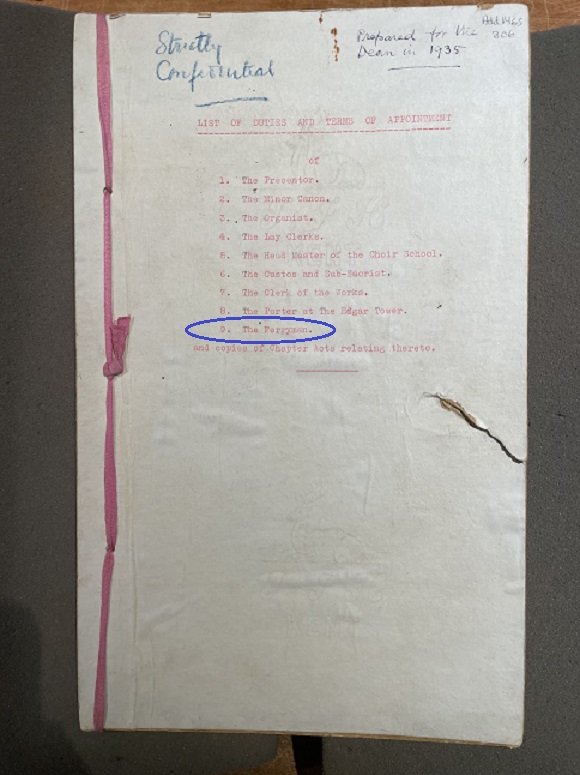
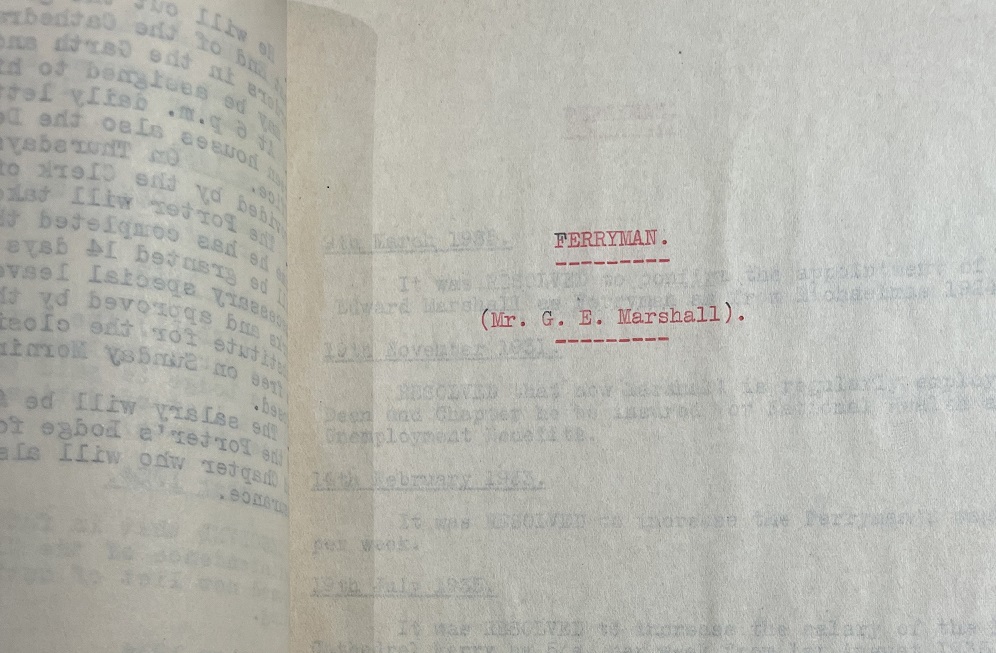
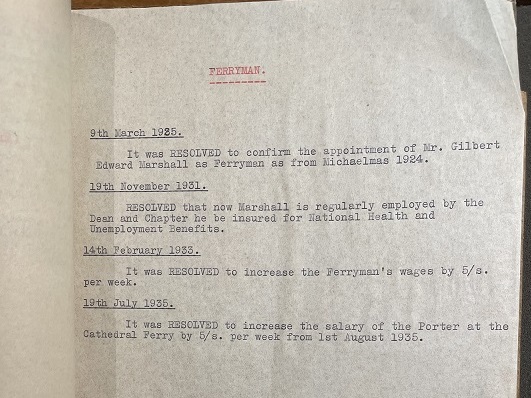
A record does exist of all the ferryman employed (though not yet located). However some adhoc records on the detail of individuals can be found. For example in between the two world wars, in 1924, cathedral records show a pay rise of 5 shillings per week for the then ferryman G Marshall:
Source: Worcester Cathedral
Source: Worcester Cathedral
Source: Worcester Cathedral
Latterly, the last full time service ended in 1958 when ferryman Gilbert Morgan (photographed below by the Watergate), an employee of the cathedral, retired.
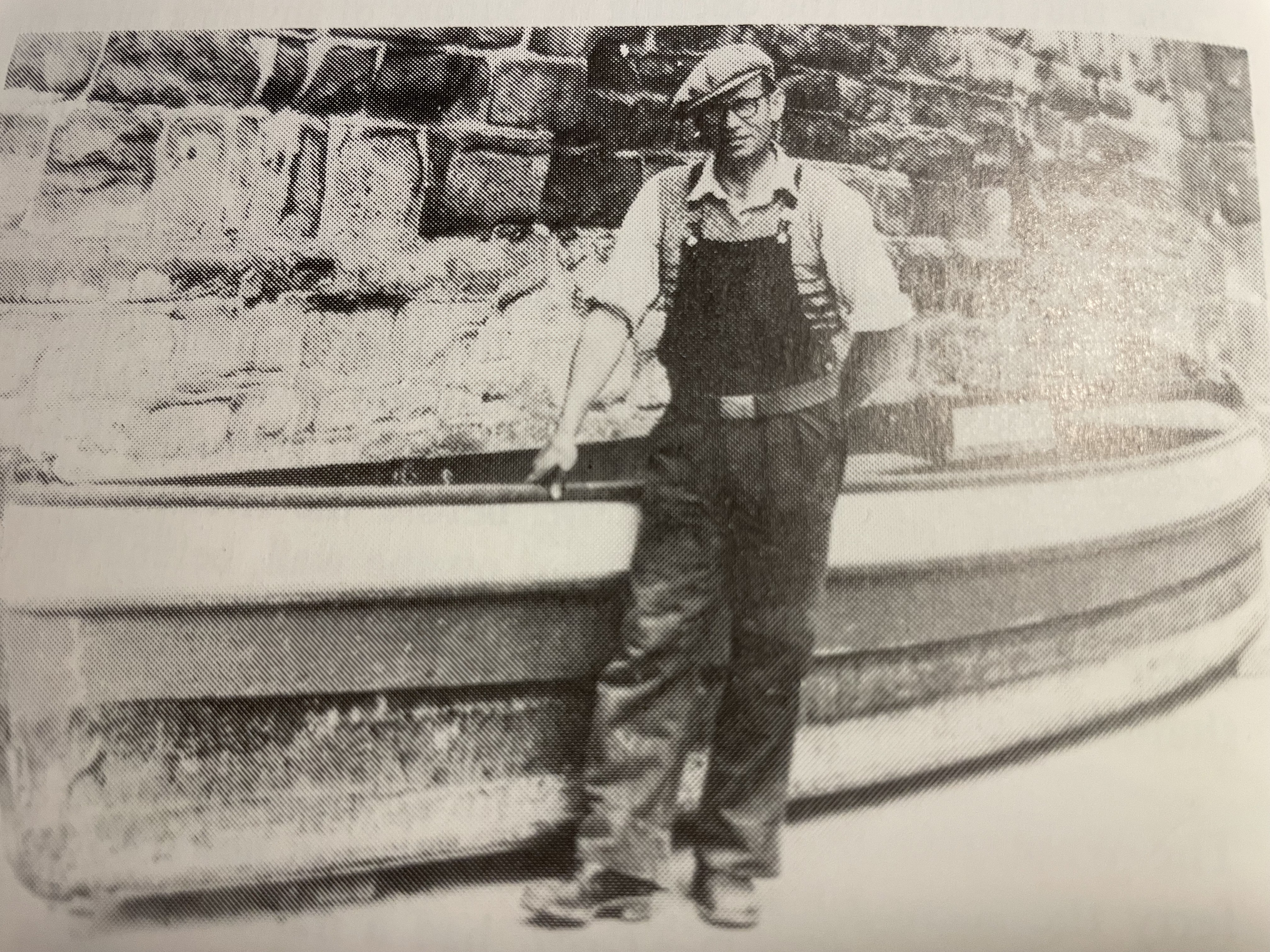
Source: H.W.Gwilliam
The Cathedral Ferry we know today was reinstated by Mark Glossop in 1983, at the request of the wife of the then head teacher of Kings School Worcester. This saw the arrival of Doris, a wooden clinker-built former lobster-fishing boat from West Bay in Dorset. (For further information about the boat, please see the link on the home page called 'About The Boat').
It was re-established as a weekend service in the summer months, manned entirely by a team of dedicated volunteers. Doris still provides the service today.
For a chronological history of Worcester Cathedral, visit medieval and middle ages website: Timeref
|