|
|
About The Boat
Doris's Origins |
|---|
| The ferry (called Doris) was originally a lobster fishing boat in West Bay, Dorset. She is 17 feet in length with a beam (width at the widest part) of 6.8 feet and is licensed to carry nine people plus the ferry-person.
In terms of her age there is no hard evidence of how old she is, other than a survey done in 1973 that suggested she was made early 1960s. Unfortunately her maker is unknown. |
Construction |
| Her construction is entirely of solid mahogany wood and clinker built (otherwise known as 'lapstrake built'). The technique of clinker built boats goes back some two thousand years to around 300 AD with the Danes and Swedes being the fore runners of this.
A clinker built boat has wooden planks that make up the sides and bottom of the boat (the hull). These planks are tapered on the upper edge and over lap each other, so the upper plank's lower edge overlaps the neigbouring tapered edge of the plank beneath it. When in the water the planks swell to form a seal (see the below illustration): |
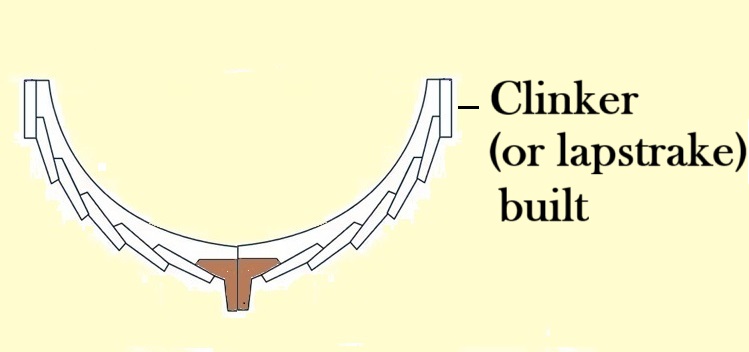
Source: Worcester Cathedral Ferry
| In clinker construction, each plank (or strake) is connected to a series of internal ribs (a length of thin long wood that forms a U shape from one side of hull to the other).
|
|
| A copper nail with a flat head is driven through the two over lapping planks and the rib. Afterwhich a 'rove' is then pushed onto the protruding nail on the inside of the hull.
Any excess on the nail end is trimmed off. The rove and nail head are then hammered down and burred to form a secure link. The following sketch gives the idea: |
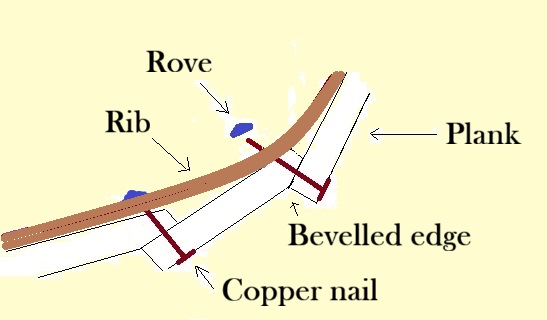
Source: Worcester Cathedral Ferry
Boat Parts |
|---|
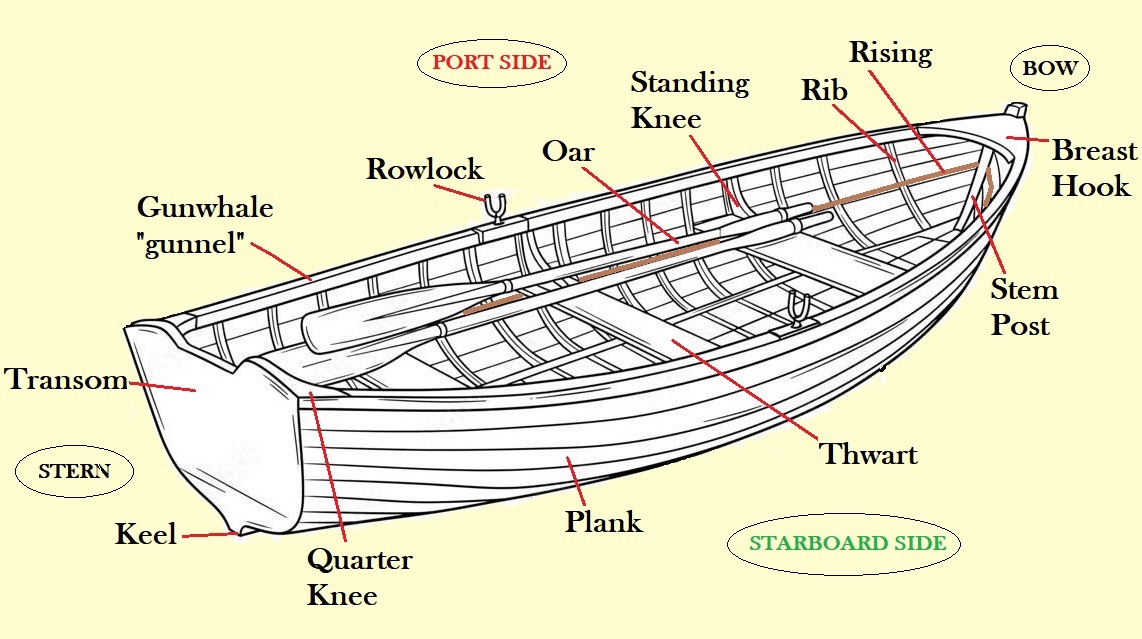
Source: Worcester Cathedral Ferry
Maintenance |
|---|
| During the winter the ferry is taken out of the water for dry storage and maintenance (see M.Pinches and Sons in Key Supporters).
The insides and outsides are stripped back and the wood is surveyed for anything that needs a repair. The first picure is an overhead view of the inside, at the back (stern) of the boat with chalked up areas that needed attention: |
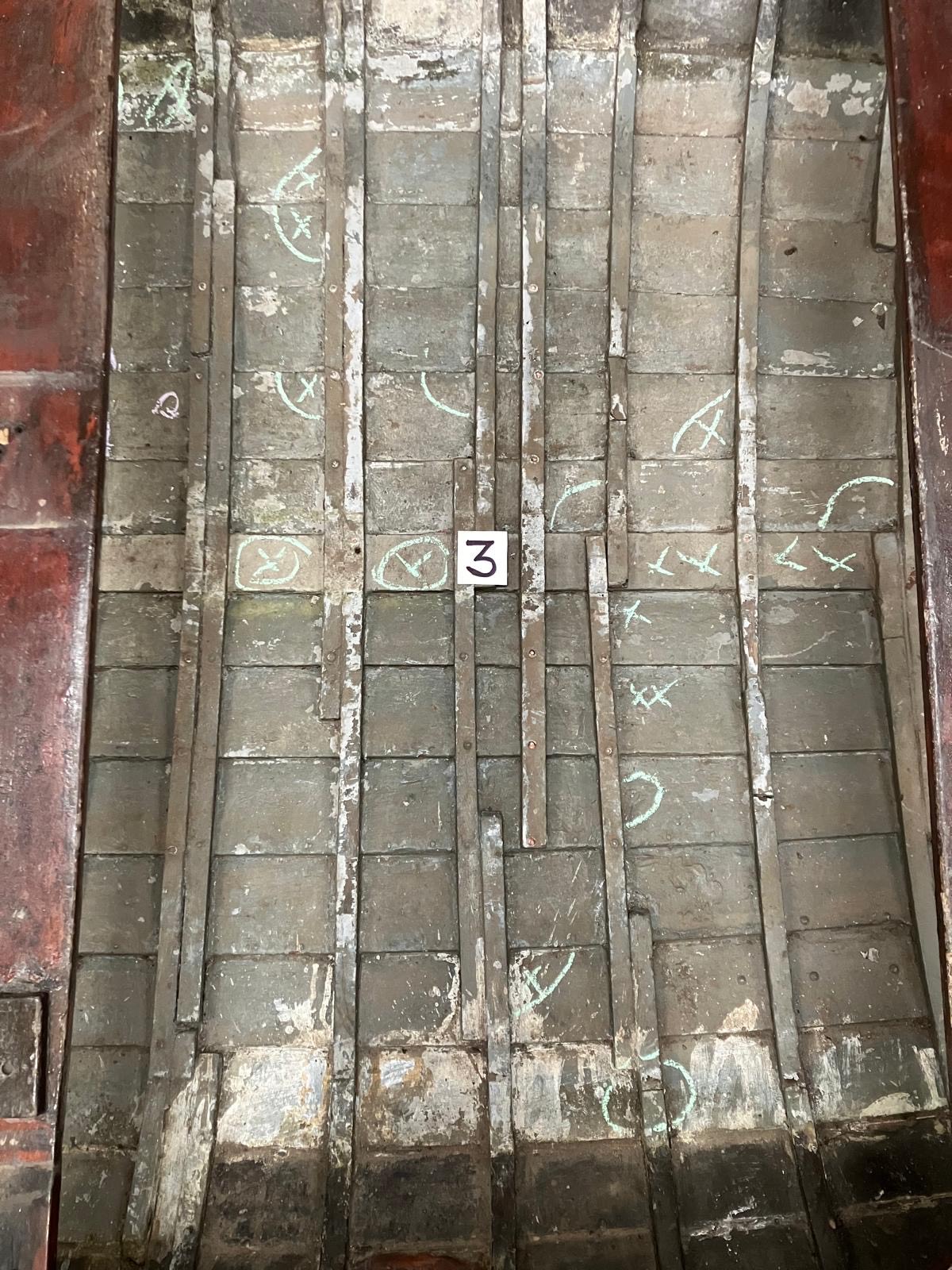
Source: Worcester Cathedral Ferry
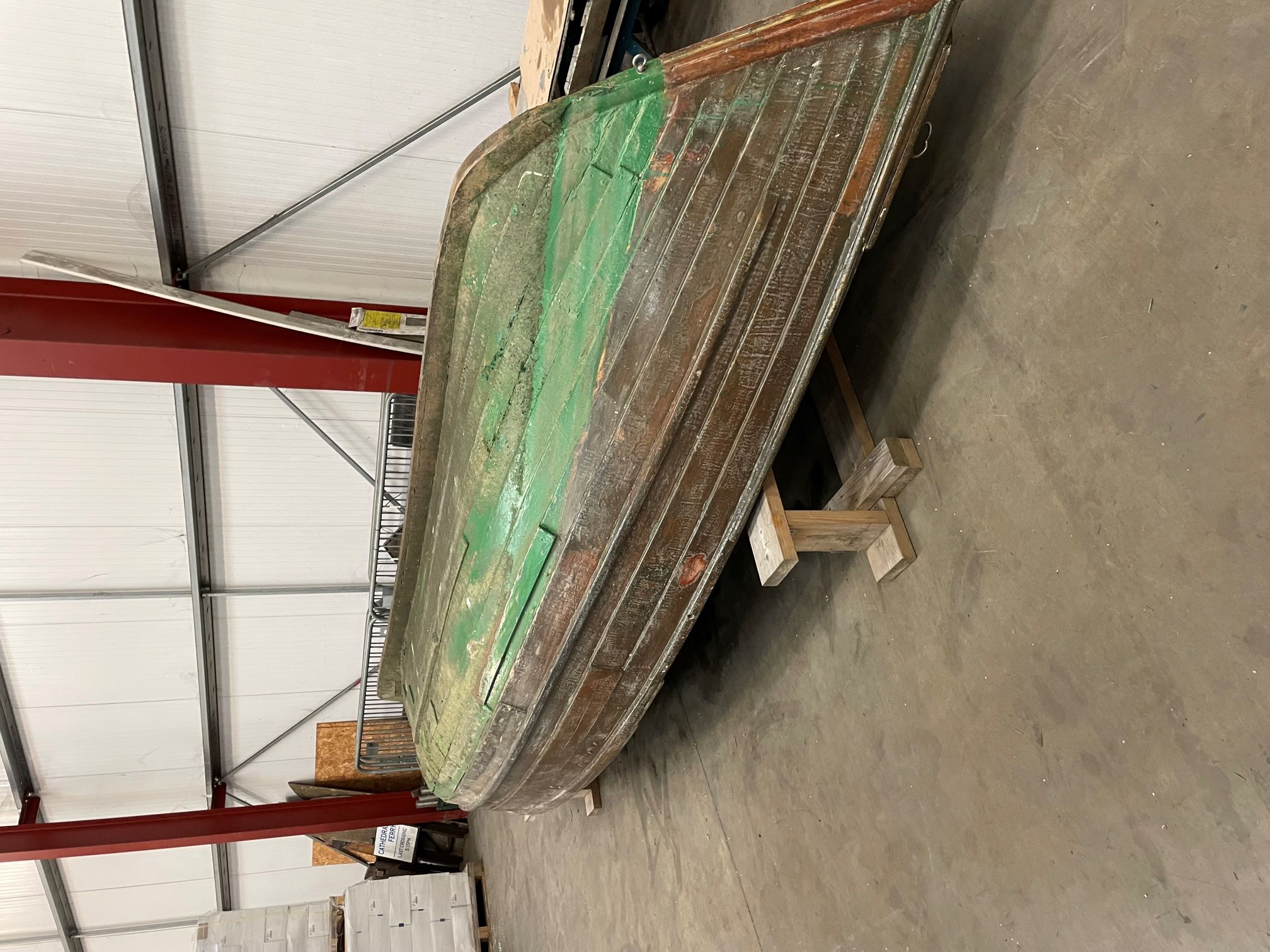
Source: Worcester Cathedral Ferry
| After sanding and cleaning a couple of coats of undercoat are applied in additon to a couple of layers of yacht varnish. |
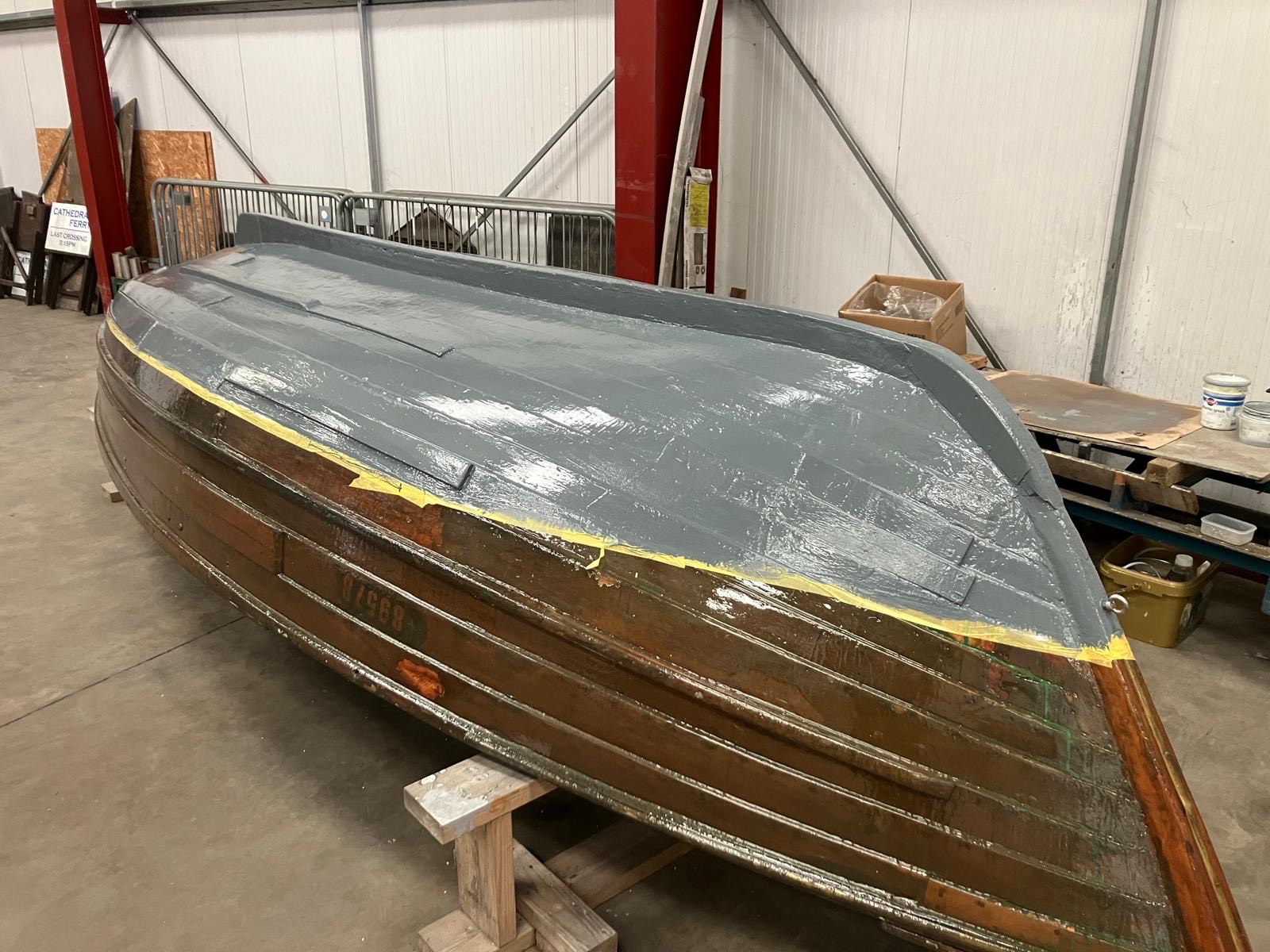
Source: Worcester Cathedral Ferry
| This is followed by the top coat and more varnish on the topsides of the hull (masking tape still on!). As well as looking smart, the primary function of these coats is to provide a protective layer to the wood. |
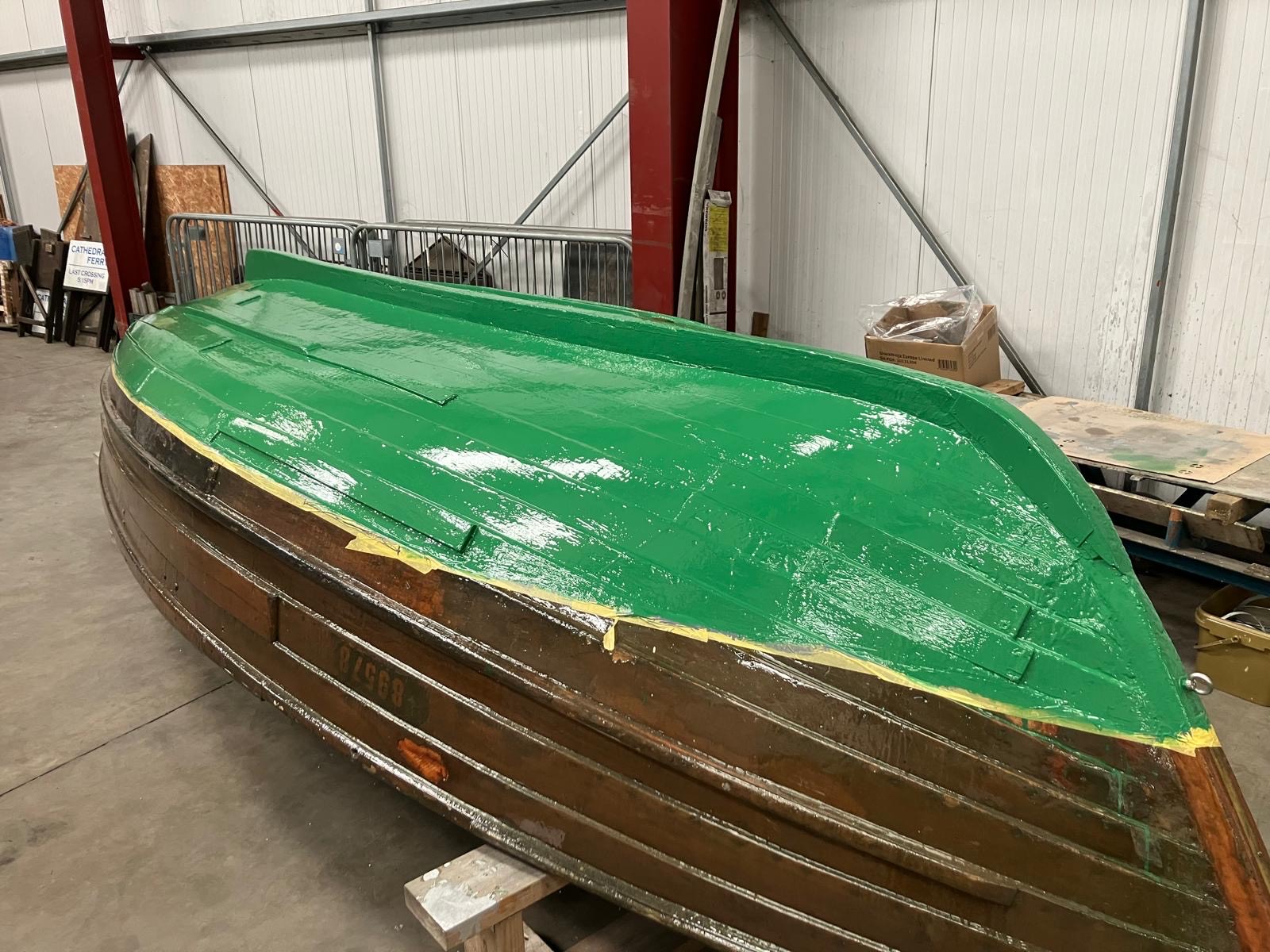
Source: Worcester Cathedral Ferry
| In the new season Doris needs to go back into the water a couple of weeks before usage to allow the planks to expand again and become watertight.
(Some traditional methods used for expanding the planks include completely submerging the boat under water. After leaving the boat like so for a few days it's then extracted again and bailed out...not something we do though). An electric outboard (supplied by Coulam Marine ) is used as of 2026 to get her to and from the ferry crossing further upstream, at which point only oars are used. Here she is at the start of the 2025 season on her Diglis Island mooring (with her old petrol engine), on a day when the Severn was as still as a mill pond: |
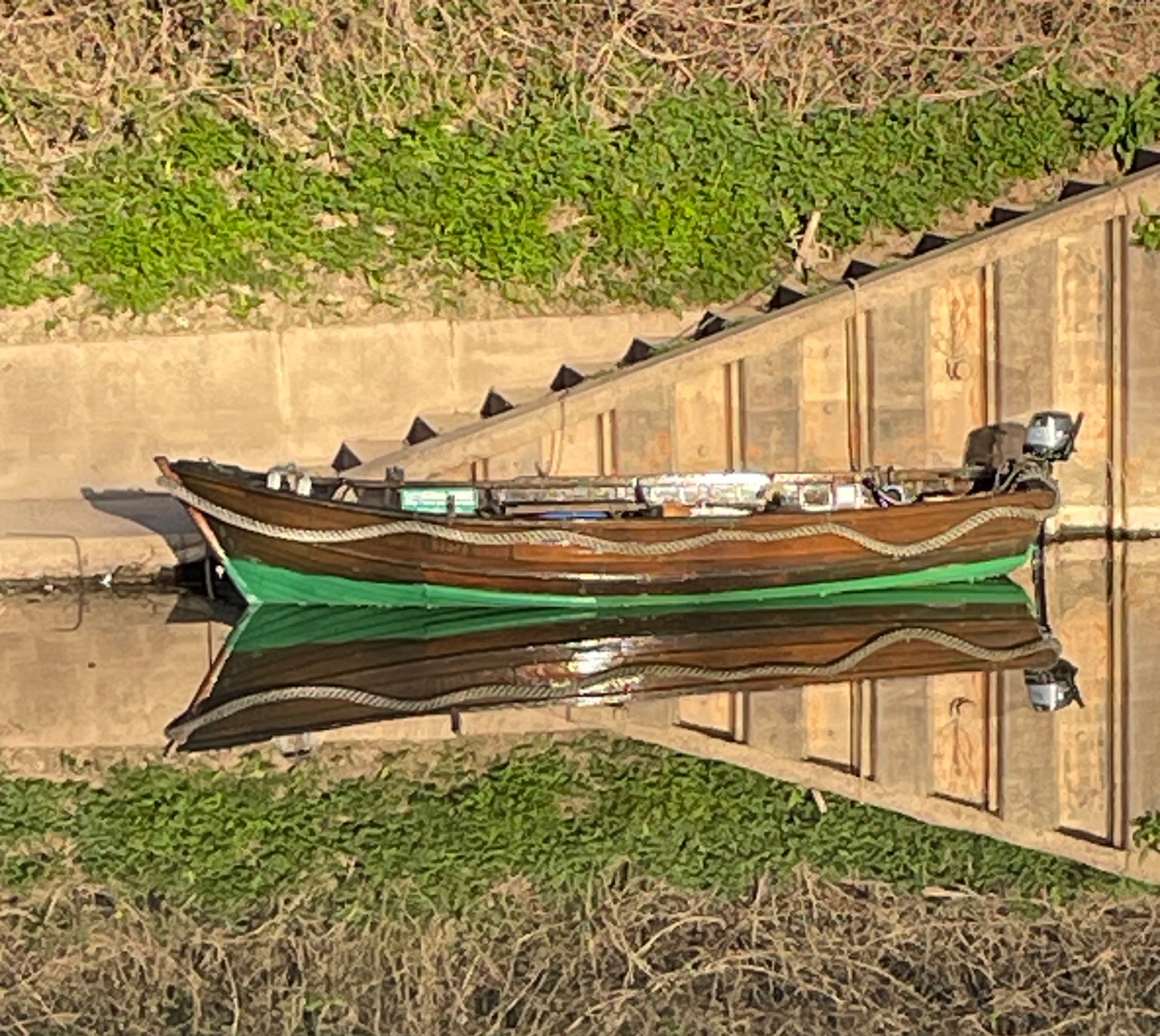
Source: Worcester Cathedral Ferry
|
|